Hot Stone Massage: What Actually Happens, and Is It Supposed to Hurt?
October 23, 2026
12 Minutes
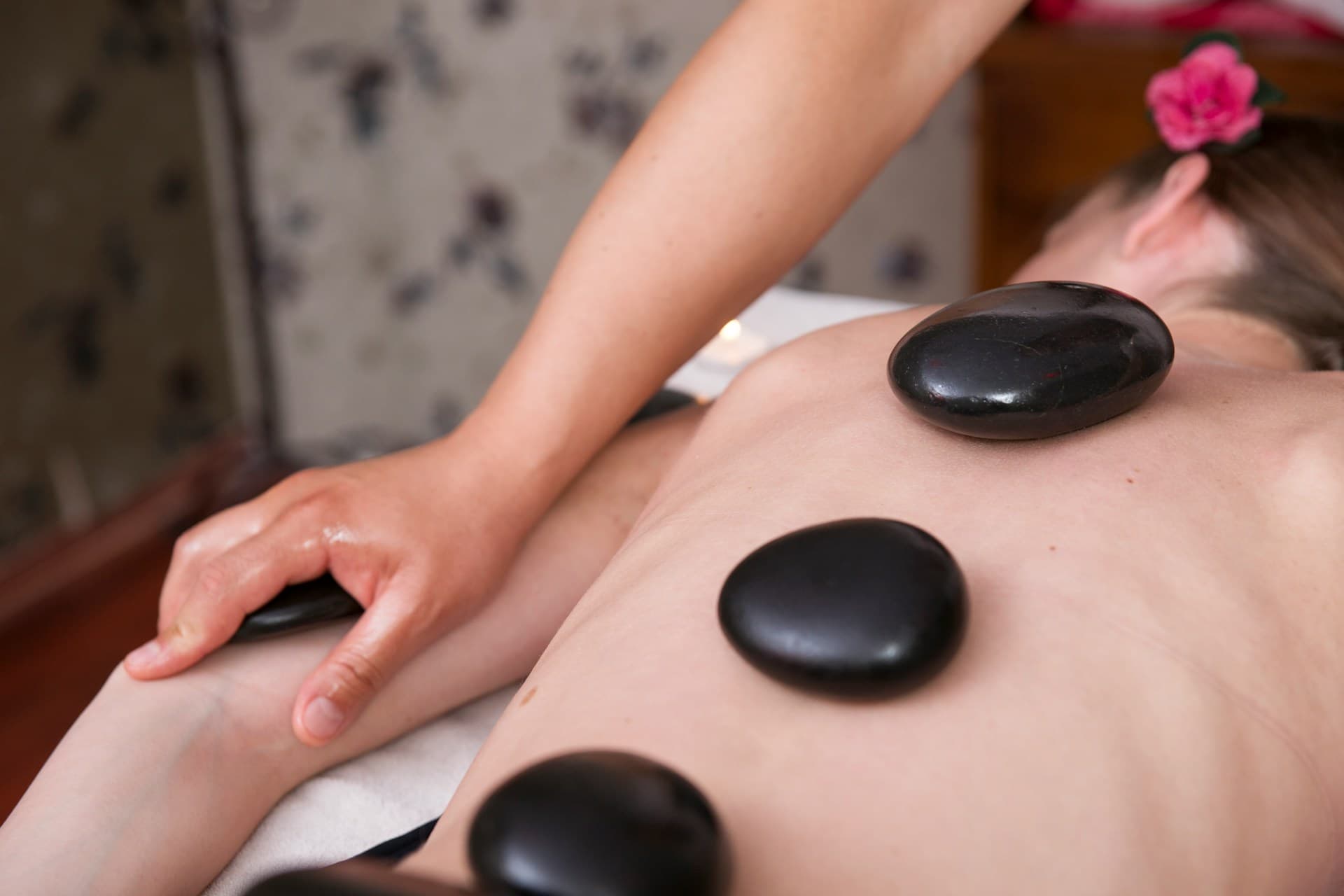
A hot stone massage is a relaxing hands-on massage where a therapist uses smooth, heated basalt stones both to rest on your body and to glide along your muscles with oil. It is never supposed to hurt. Therapists use the warmth to soothe tight surface muscles so their hands can work with gentle pressure rather than force. If a stone feels sharp, burning, or painful, that is not a sign of deep work; it is a sign that the stone is too hot or has rested too long in one spot, and you can ask to have it moved or cooled immediately. If you cannot feel heat properly—from diabetes, neuropathy, a healed burn, or nerve damage—this safeguard does not work, because a stone can burn you without you feeling it happen. In that case, you should check with your doctor first and ask your therapist for a hands-only massage instead.
What Actually Happens During a Hot Stone Massage
A hot stone session builds on familiar massage traditions, usually following the rhythm of a classic Swedish massage. The difference is the presence of smooth, flat stones, usually volcanic basalt, which absorbs and holds heat well. These stones sit in an electric water basin beside the table, kept at a steady, controlled warmth throughout your visit.
When you arrive, you will fill out a short health intake form where you can note any areas of stiffness, sensitive skin, or health conditions. The therapist leaves the room so you can undress in private to your personal comfort level, which for most people means undressing down to their underwear. You lie down on a cushioned massage table under a clean sheet and blanket. Throughout the session, the therapist uses careful draping, keeping your entire body covered and uncovering only the specific arm, leg, or section of your back being worked on.
Once you are settled face down on the table, the therapist applies warm massage oil to your skin. They then introduce the stones in two distinct ways:
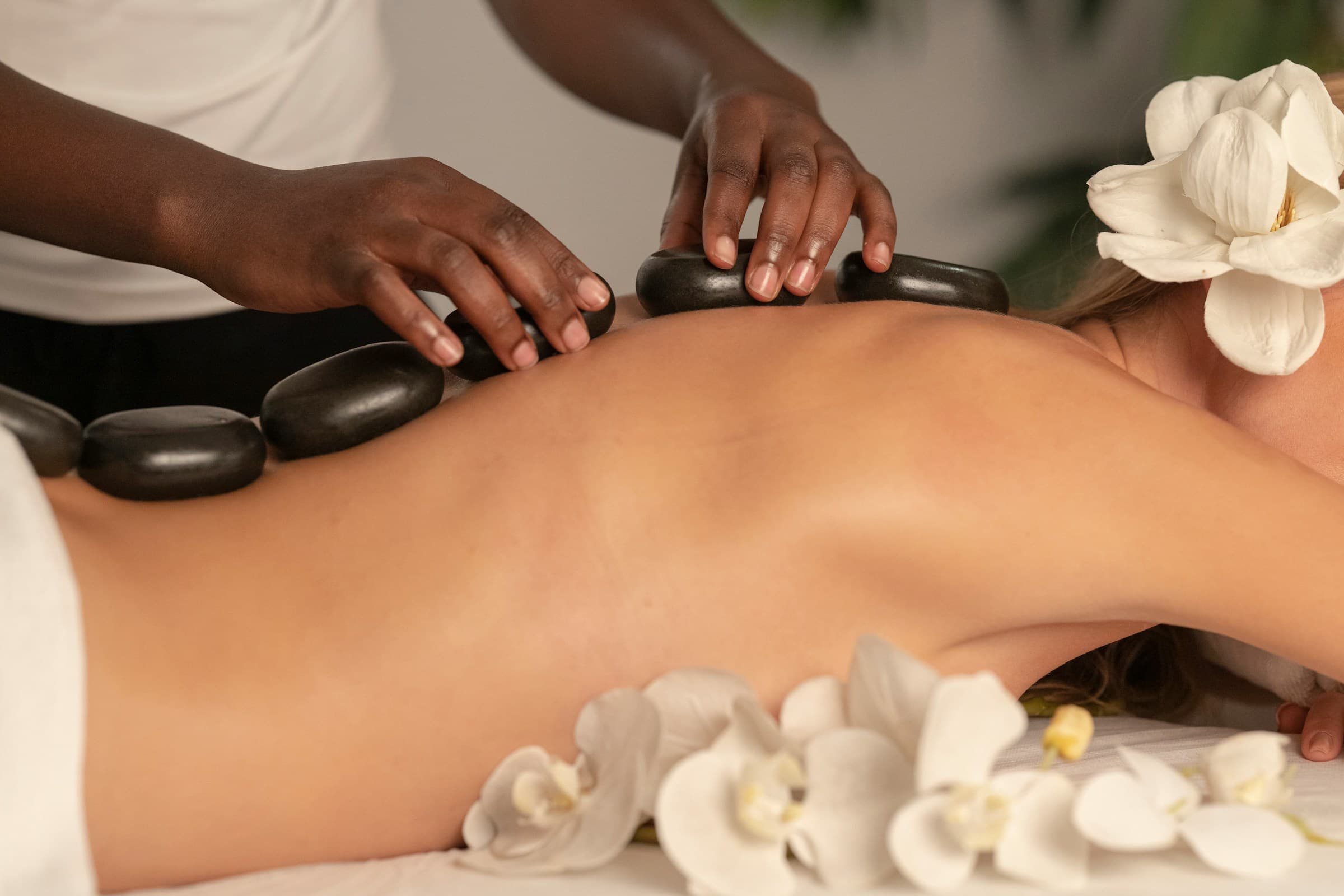
First, they place stationary stones on specific resting points. The therapist might place smooth, broad stones along your spine over a protective towel or sheet, slip smaller stones into the palms of your hands, or place tiny stones between your toes. The therapist uses the weight and steady warmth of these resting stones to soothe tight surface areas.
Second, the therapist picks up two oiled stones in their own hands and uses them as massage tools. Instead of using only palms and thumbs, the therapist glides the smooth surface of the stone along your neck, shoulders, back, and calves. The motion feels like a firm, deeply warm hand stroking smoothly along your muscle bands. Hand strokes and stone strokes alternate naturally: a warm stone glides up your back, followed immediately by the therapist's hands kneading the warmed muscle.
Most sessions run 60 to 90 minutes, and the length is set by the menu, not by the stones. It varies by spa and country. Midway through, the therapist may ask you to turn over onto your back, adjusting the sheets for complete privacy, to work on your arms, upper chest, and legs. Because stones naturally cool as they transfer heat to your skin, the therapist regularly returns cooled stones to the warming basin and retrieves fresh, warm ones. When the time ends, the therapist removes all stones, covers you with the blanket, and leaves the room so you can slowly sit up, take a breath, and get dressed in private.
Is Hot Stone Massage Supposed to Hurt?
Hot stone massage is not supposed to hurt. The heat against your skin should feel like a comfortably warm bath or a warm towel resting on a sore neck. It should invite your shoulders to drop and your breathing to slow down. If the heat ever feels like a hot pan or a sharp pinch, something is wrong, and you should speak up right away.
The worry about pain is understandable. Because the name on the menu has the word "hot" in it, many first-timers wonder if intense heat is the price required to break through stubborn muscle stiffness. It is not.
Burns do happen. They are uncommon, and they are what happens when a stone is too hot or rests too long in one place. In the medical literature, a 2017 case report documented a thermal burn from hot stone therapy, and medical records reported by KPRC Houston in 2012 detailed four burns along a client's spine, three second-degree and one possibly third-degree, after a spa visit. In public online discussions, people have described mistakenly believing that stinging heat was an expected part of the session. As industry guidance, the American Massage Therapy Association (AMTA) warns that burns can result if hot stones sit directly on a client's skin, and that a protective barrier like a towel or sheet is required under resting stones. A stone left stationary against bare skin concentrates heat in a single spot.
You never have to endure discomfort to be polite. Good therapists actively rely on your feedback to keep the temperature safe and pleasant. If a stone feels even slightly too warm, you can use plain, ordinary words at the exact moment you feel it:
- "Cooler." The therapist will swap the stone for a cooler one or let it air for a few seconds.
- "Off." The therapist will take the resting stone away immediately.
- "Hands instead." The therapist will set the stones aside and continue using only their hands.
- "Stop." The therapist will pause the session completely.
None of these requests are complaints or interruptions. They are standard parts of a professional massage session.
Is a Hot Stone Session Actually a Massage?
A hot stone massage is a massage when there are skilled hands actively working your muscles, and it is something else when there are not. Both experiences are often sold under the exact same name on spa menus, leaving first-time clients confused about what they are paying to receive.
In a genuine hot stone massage, heated stones are tools in the hands of a trained therapist. The therapist kneads tight spots, works out tension in your shoulders, and uses the stones to stroke and stretch muscle fibers. The warmth supports the massage; it does not replace it.
In some establishments, however, an appointment booked as a hot stone massage turns out to be an hour of resting stones with almost no hands-on touch. One reviewer described an hour of stones placed and removed with no massage in between. In that kind of appointment, a client lies under a sheet while a therapist sets warm rocks on their back, steps away to wait, returns later to replace them, and calls the session finished. While lying quietly under warm rocks can be relaxing, it is a resting heat session, not a massage.
Hot stones can be used on their own as a quiet relaxation session or incorporated into hands-on bodywork like Swedish massage, as WebMD notes. Stone options are widely available: according to the 2017 US Spa Industry Study by the International SPA Association (ISPA), 92% of US spas offering massage offered a stone massage on their menu. Whether a specific spa offers it as an add-on or as a standalone session varies. Because menus rarely explain how much actual massage is included, you can find out before booking by asking two simple questions:
- "Is your hot stone service a full hands-on massage using heated stones, or do the stones mostly rest in place?"
- "About how much of the hour does the therapist spend working with their hands?"
A professional spa or clinic will answer these questions clearly. Asking them ensures you book the experience you want, rather than spending your time and money waiting under stationary stones.
Does Hotter Mean Better?
Hotter does not mean better. In massage therapy, heat is a preparation tool, not a contest of endurance.
The purpose of heat is straightforward: therapists use warmth to soothe tight surface tissues so that ordinary, moderate hand pressure can work into the muscle without fighting resistance. In discussions about massage, people often describe warm muscles as yielding more easily to touch than cold ones, making the massage feel gentler from the start. That is what therapists use the stones for in practice, rather than a proven physiological claim.
Extra heat does not add benefit. Whether higher temperatures reach deeper into muscle tissue has not been tested, and turning the heat up only raises the risk of a burn. Commercial claims often promise that heat penetrates deep into muscle beds, but this has not been shown in clinical testing. In fact, a 2018 study using thermal imaging found that hot stone massage produced only modest surface-temperature changes of 2% to 6% on the body—a mild, localized warming of the skin rather than deep internal heat penetration.
The upper limit on a stone's temperature is where it stops helping and starts burning. WebMD cautions that stones heated too high can cause burns. As practical industry guidance, the American Massage Therapy Association (AMTA) recommends that a therapist hold each stone comfortably in their own bare hands for at least five seconds before using it on a client. If the stone feels too hot for the therapist to hold with ease, it is too hot to touch your skin.
You can recognize when a stone is too hot before an actual burn occurs:
- The sensation shifts from an expansive, soothing warmth to a sharp, stinging pinpoint.
- Your muscles flinch or tighten under the stone rather than sinking into the table.
- Your skin underneath feels hot and sensitive to the touch rather than comfortably flushed.
If you notice any of these sensations, speak up immediately. A stone at the proper temperature should feel comfortably warm, never something you have to breathe through.
Is Hot Stone Right for You, and How Does It Compare to Swedish or Deep Tissue?
Hot stone massage is an excellent fit for specific comfort needs and personal preferences:
- People who feel cold easily. If you often feel chilly on standard massage tables or struggle to relax in air-conditioned rooms, the sustained heat of the stones keeps your body comfortably warm.
- People carrying general stress and muscular fatigue. If you want to unwind from everyday tension without aggressive physical pressure, the soothing rhythm of warm stones creates a deeply calming sensory experience.
- People who love gentle bodywork. If you already enjoy relaxation massage and want to add an extra layer of comfort, hot stones enhance that familiar feeling.
Understanding where hot stone sits alongside other popular menu options helps you choose the right session:
- Hot stone versus Swedish massage. A Swedish massage is the basis of modern relaxation bodywork, using long gliding strokes, gentle kneading, and circular friction with massage oil to ease muscle stiffness. A hot stone massage uses the same Swedish strokes, but the therapist holds warm stones during the gliding strokes and places stones on resting spots to add soothing heat. If you want classic relaxation with added warmth, choose hot stone.
- Hot stone versus deep tissue massage. A deep tissue massage focuses on easing chronic muscle tension and stubborn tightness in deeper layers of muscle tissue. It uses slow, focused pressure with forearms, fists, and thumbs, often involving firm pressure on specific trigger points. People who want firm pressure usually find hot stone lighter than expected. That is what people report from experience, not something a clinical study has tested. If your primary goal is working out stubborn tightness with strong, concentrated force, deep tissue is the more suitable choice.
To see how these massage types compare across different health goals, Which Massage Is Right for You offers a clear overview of common massage types.
After your session ends, drink a glass of fresh water. Water afterwards is comfort, not a flush; your liver and kidneys do that work and massage does not speed it up. Lying under warm blankets for an hour naturally leaves your mouth dry, and a cool drink of water is refreshing. To learn more about common beliefs around bodywork and waste removal, see Does Massage Release Toxins?.

Who Should Check With a Doctor First, and What If Something Goes Wrong?
While hot stone massage is comfortable and soothing for most healthy adults, certain physical conditions require serious caution.
The most critical safety consideration involves temperature sensation. If you cannot feel heat properly—from diabetes, neuropathy, a healed burn, a spinal injury, or a stroke—a stone can burn you without you feeling it happen. In a 2024 systematic review of burn injuries in people with diabetic neuropathy, researchers found that thermal injuries largely occurred because individuals lacked awareness of how heat therapies affect numb skin, leading to preventable and serious complications. Earlier hospital data published in 1987 in the Journal of Family Practice similarly found that over a quarter of hospitalized diabetic burn patients suffered preventable burns caused by reduced sensory awareness.
In an ordinary session, your personal sensation is the essential safety mechanism that alerts the therapist if a stone is overheating. When nerve damage or reduced circulation impairs that sensory feedback, your skin cannot tell your brain that heat is building up to a dangerous level. If you have reduced sensation in any part of your body:
- Inform your therapist during your initial intake before anyone touches a stone.
- Ask the therapist to test every stone on an area of your body where sensation is completely normal.
- Request that the therapist keep the stones moving continuously rather than leaving them stationary on your skin.
- Ask for hands instead: requesting a hands-only Swedish massage removes the heat risk entirely.
Other health conditions require checking with a qualified healthcare provider before booking:
- Pregnancy. Hot stone massage is generally avoided during pregnancy, and expectant mothers should check with their doctor or midwife before receiving heat therapies. Those seeking bodywork can choose specialized prenatal massage with a certified therapist instead.
- Cardiovascular conditions and blood thinners. High blood pressure, heart disease, or medications that thin the blood warrant medical clearance before receiving heat therapy.
- Recent surgeries, acute injuries, or open skin. Heat should not be applied to unhealed incisions, fresh sprains, broken skin, or active rashes.
For anyone managing an illness, an acute injury, or a long-term health condition, a detailed review of standard reasons to avoid massage is found in When You Should Not Have a Massage.
For anyone who leaves an appointment hurt, burned, or uncomfortable, When a Massage Goes Wrong covers what post-session injuries look like, when to seek medical care, and how to report the issue. If the skin breaks, blisters, or causes severe pain, have it evaluated by a doctor or urgent care clinic promptly. Choosing a qualified professional through reputable resources like choosing a massage therapist is the best way to find a therapist who works with hot stones safely.
This is general information, not medical advice. If you are unsure, ask your doctor.
Sharing Services
Pick the one you like.

Researched & Written by afinika
CEO @ Welleta.com
Fluffy leta
Services
- hot stone massage