Bamboo Massage: What It Is and What It Actually Feels Like
Published on
Updated on
6 Minutes
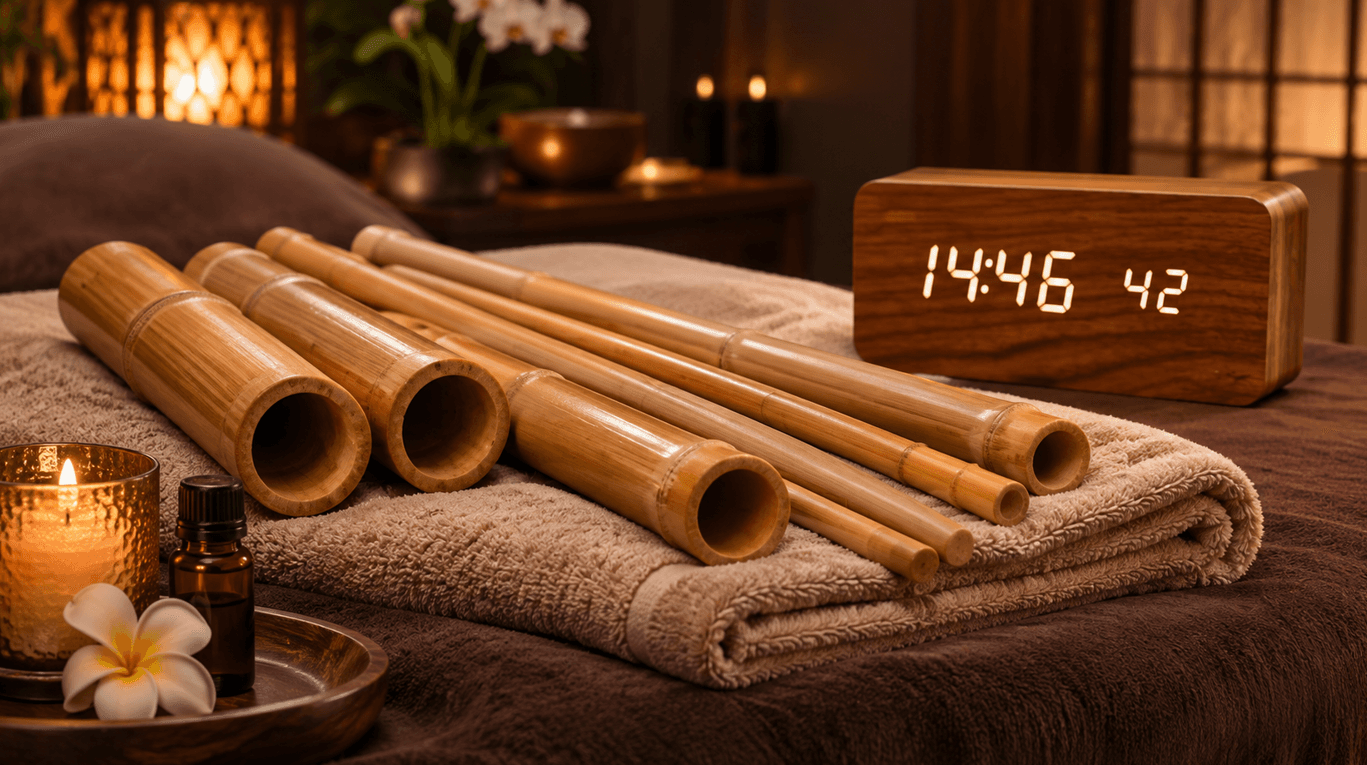
A bamboo massage is not some separate tradition from a different part of the world. It is the massage you would recognize: oil, a table, long strokes, a therapist who works with you. The difference is the instrument. Instead of bare hands, the therapist holds smooth bamboo rods, warmed before the session, and rolls and presses them along your back, shoulders, legs and arms. The warmth reaches your shoulders first, and the rounded rods let the therapist spread their pressure over a wide strip of skin, so it can be firm without feeling sharp. People come for the feel: deep, even, and warm, all at once.
What Actually Happens in the Room
You are checked in the same way you would be for any massage: a short health form, a private moment to undress to your comfort level, and a massage table with clean sheets and draping that keeps everything covered except the part being worked on. A bamboo massage runs the same length as any other: sixty or ninety minutes.
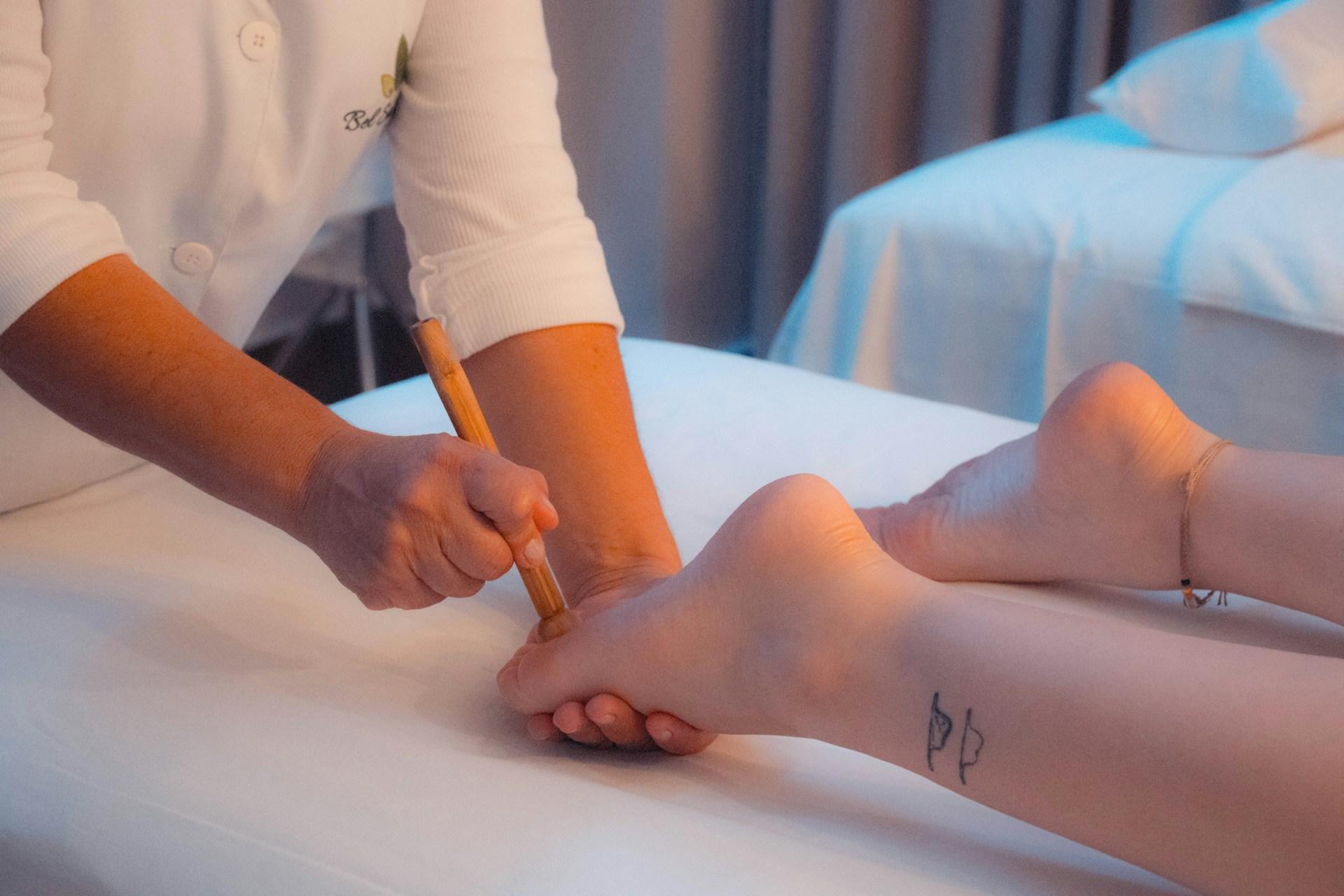
Before the work starts, the therapist checks the rods are warm, not hot, and applies oil. Instead of opening with palms, they set a warm rod on your upper back and glide it down. A rod feels like a firm hand that covers more area: your whole upper back is under it at once, so the pressure reads as a broad, steady grip rather than a series of knuckles and thumbs. The heat arrives first, a comfortable, towel-on-a-sore-neck warmth that settles into your shoulders and makes your breathing slow down.
Then they take the rod up again and roll it, sometimes using two rods at once, sometimes one, following the direction of your muscle. Rolling has its own rhythm: long glides down the back and thighs, then a firmer pass with real weight through the mid-back and calves. Because the surface of a rod is smooth and hard, it does not knead the way hands do. It pushes through. Many people describe the sensation as deeper than their last Swedish massage and gentler than they expected for how deep it felt. Rods and hands take turns all session: a long pass with the wood, then the therapist's fingers digging into the warmed muscle right where it needed it, a knot between the shoulder blades, a stubborn corner of the neck, the small of the back. At some point you turn over, the sheets are adjusted, and the same rhythm continues on your arms, neck and front. When the time ends, the therapist covers you, leaves you alone to come up slowly, and closes the visit with a glass of water and a few quiet minutes on the table before you head out.
Is It Different From a Regular Massage
One thing bamboo massage is not: a different treatment. There are no separate bamboo strokes that you would not get by hand. If your therapist works Swedish, deep tissue or trigger-point pressure, they do the same work with the rods, and the deep roll through the mid-back is the same work a deep tissue therapist does with their hands, with different pressure and different warmth. If a menu lists bamboo, Swedish and deep tissue as separate items, it is the same therapist and the same strokes.
The evidence is the same as for any other massage: it may ease pain, most clearly over the time the massage lasts, and the reviewers get less sure when the studies behind it are small. Stress is where the claims run out: a 2011 review looked at cortisol, the hormone your body turns up when it is under strain, and found it had hardly moved after a massage at all, mostly the same as no effect.
Is the Heat Safe?
The heat should feel like a warm towel, never like a hot pan. Rods stay in motion most of the time, which keeps them safe, but a rod that rests on one spot long enough can press concentrated heat into your skin. Burns are rare, a 2003 safety review in Rheumatology found serious complications from massage are probably true rarities, but they have been reported from heated-massage treatments, and hot stone massage is where a published account of them comes from. There is not yet any research on bamboo rods specifically, so the same caution applies: the same heat, after all.
The good news is that your own warning system works here: you will feel it. If the rods start to sting, say so in plain words. "Cooler." "Hands instead." "Stop." These are ordinary requests in the middle of an ordinary massage, and a good therapist will take them exactly as they are meant to be.
There is one person for whom that warning system does not work: if you cannot feel heat well, from diabetes, neuropathy, a healed burn or nerve damage, a rod can get you while your body stays quiet about it. A systematic review of burns sustained from body-heating devices found the documented injuries had come to people with diabetes and peripheral neuropathy, people whose bodies no longer warn them about heat. The Mayo Clinic's guidance on massage lists it among the situations to talk through with your provider first. For you, check with your doctor first, and a hands-only massage is the safer booking. This is general information, not medical advice. If you are unsure, ask your doctor.
The full list of conditions that pause any massage, not just heated ones, is in our guide on when you should not have a massage.
Who Tends to Love It
There is a person who has booked deep tissue and left hurt. Their knots were worked hard, but hard and deep kept reading as painful, and they started to wonder whether deep was the same thing as a lot of pressure on a spot that already stung. That person tends to come back to bamboo: the rod takes the same depth without the pinch, so they get the heavy, pressing feeling they wanted without being hurt to get it.
And there is a person who lies down cold. Their fingers are numb in January, their feet never warm up, and they get stiff when they sit still for long, sitting at a desk, waiting for a table, sitting through winter. The warmth on their shoulders in the first minute is the part they tell someone about afterwards, before they even describe the pressure. They come back for the feeling of being warm.
If you want your therapist's fingers specifically, working small and exact on a single knot, hands-only is the better choice.
What to Know Before Booking
Two plain questions cover almost everything. "Are the rods heated?" sets your expectation about warmth. "Do you work with your hands as well?" tells you whether you are booking an hour of rolling wood or a real massage that happens to use some wood. A therapist who answers both without hesitation is a therapist who has done this before and knows what you are choosing.
Sharing Services
Pick the one you like.

Services
- massage