Thai Massage: What Happens, Is It Supposed to Hurt, and What You Can Control
November 5, 2026
7 Minutes
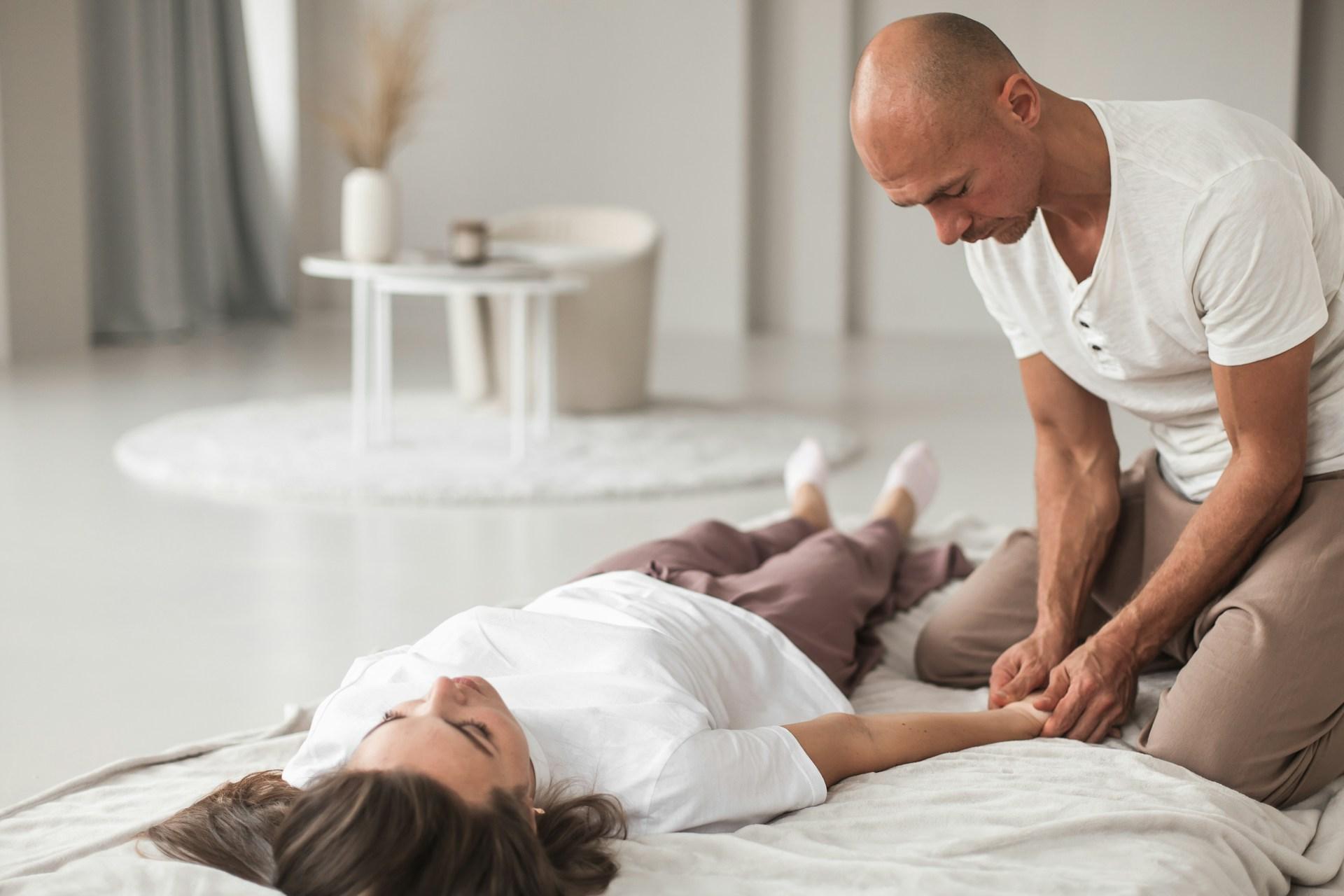
When you walk into a traditional Thai massage session, the first surprise is that there is no massage table. There is a wide, firm mat on the floor, and the whole session happens on it. You stay fully clothed throughout, in loose cotton garments like flexible trousers and a top. The studio provides them. No massage oil or lotion is used.
The other big difference from a spa massage is that you do not drift off. You move and breathe with the therapist.
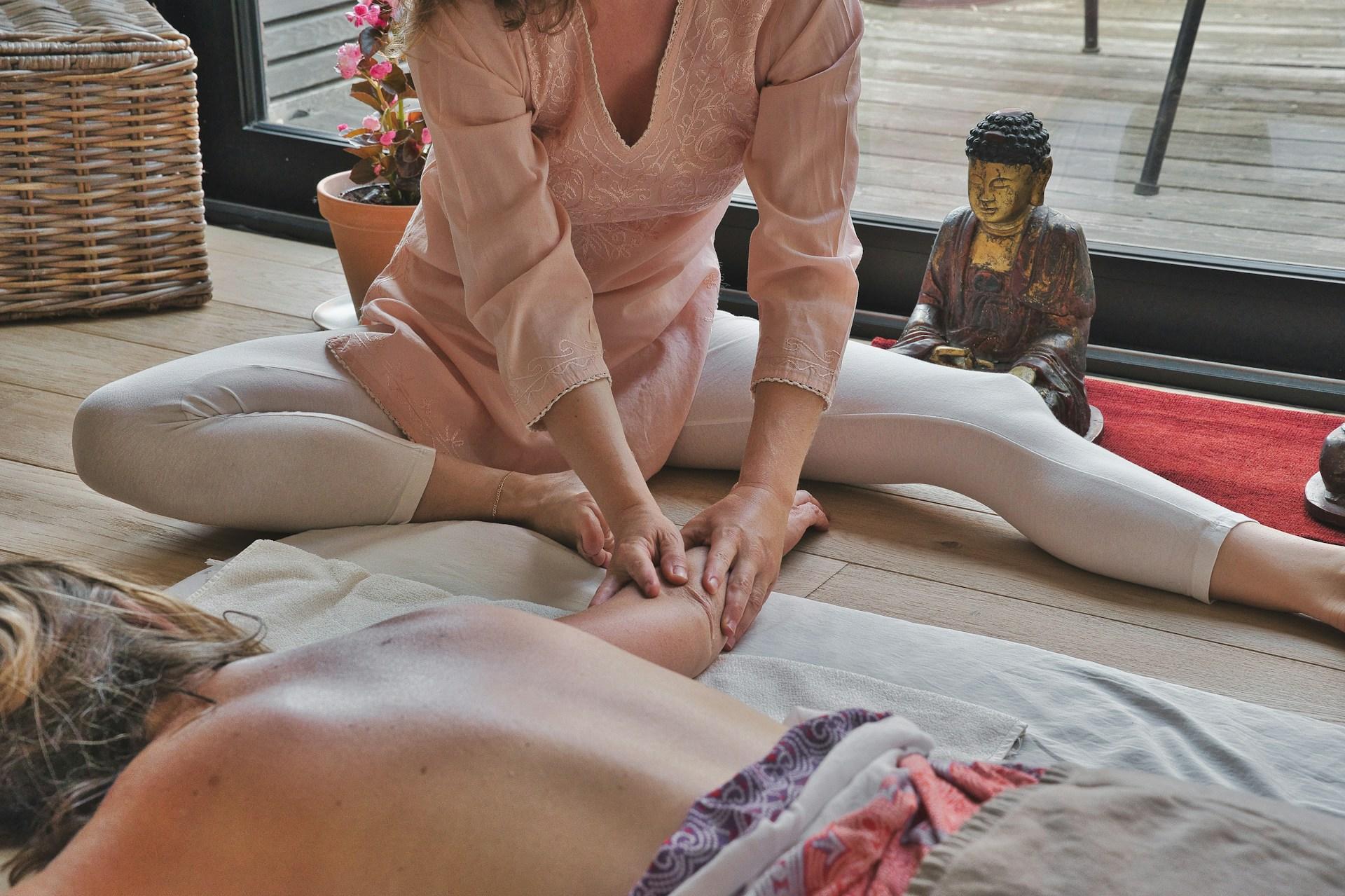
Here is how the visit plays out. A session runs sixty or ninety minutes, long enough to move slowly and not rush. Before you lie down, you get changed into those clothes in the privacy the studio offers. Then you lie face down on the mat, and the work starts at your feet: palms pressing into your soles first, thumbs finding the thick tendons underneath, then a dozen slow, rocking strokes up the calves and shins, about four beats to each stroke.
Moving up your body, the therapist uses more than their hands. Forearms roll along your thighs. Elbows dig into the hard spots in your lower back. Knees settle into your shoulder blades when the hands need a longer reach. They also guide your limbs into slow, yoga-like stretches that open tight hips, shoulders, and hamstrings.
Then come the stretches you have heard about. The therapist reaches behind your knee, lifts your leg, and draws it slowly toward your chest. They tell you to breathe out as they ease into it. Your hamstring objects at first: a hard, gripping ache down the back of the leg. But as you keep breathing and they hold the position instead of forcing it, that ache settles and deepens into something your body reads as release. Other stretches follow, hips opened sideways, shoulders drawn back, spine gently extended.
Somewhere near the end you roll over onto your back. The work starts again where it began: palms into the other sole, thumbs finding the same thick tendons, the same slow strokes up the far calf. Then comes something the front pass never had. The therapist settles one knee against your hips and draws both legs up slowly, sideways, opening both hamstrings at once. The ache arrives deeper and broader than a single-leg stretch, a long pull across your whole lower body, and it eases the same way: breath out, hold, let it settle.
This is how traditional Thai bodywork, called Nuad Thai, has always been done. Some people describe the work as running along energy lines called Sen. That is the traditional Thai way of mapping the body, not verified anatomy. You still get a real physical session, stretch and pressure, whatever you make of the energy lines.
Is Thai Massage Supposed to Hurt?
In online reviews and first-time accounts you will see phrases like "first Thai massage - ouch." A good session should feel like a strong, satisfying stretch with firm pressure. People often call it a "good hurt." It should not hurt in a bad way.
It should never produce sharp, electric, joint, or pinching pain. The belief that "authentic Thai massage must hurt to be effective" is a myth. There is no evidence that pain means the session worked. In fact, pain can signal that your muscles are protecting themselves.
When a therapist pushes too hard, such as standing with full body weight on tight muscles without easing in, your nervous system responds with reflexive muscle guarding. That is an involuntary tightening around the stressed area. It leads to bruising and muscle soreness, not to any relief.
What You Are Allowed to Ask For, and What You Can Say No To
You hold authority over your body for the whole session. If a stretch feels too intense or a position presses on a vulnerable joint, you can ask for lighter pressure or skip that move entirely. You can also ask for more pressure, or ask to stop.
One boundary deserves its own warning. Sometimes, in the middle of the stretches, a therapist will suddenly twist your lower back, or your neck, and you will hear a snap: the vertebra settling. That sudden twist and crack is not part of Thai stretching. The slow, rocking, controlled work never needs it; it is a separate move, fast and forceful, that some studios add and others never use.
There is a reason to know the difference. Massage therapists work on soft tissue. They are not chiropractors or osteopaths. Fast, forceful twists of the neck or spine carry real risks, including strain of the arteries along the neck. A 2012 lab study found these strains can reach near their breaking point in some cases. A cracking move should never happen without you agreeing to it first, and you can refuse it entirely, without any explanation or apology. Saying "no cracking, please" or "no twisting my back" when you arrive settles it.
To steer the rest of the session, speak up in plain English, like "a little lighter, please." If you are abroad, you may hear simple Thai words for pacing: "bao bao" for gentler pressure, and "cha cha" for slower.
Who Thai Massage Is Best For, and Who Should Choose Something Else
Thai massage suits people who feel stiff, tight, or compressed from desk work, travel, or training. It is also good for those who dislike being disrobed or covered in oil. It is a more active kind of session, built around mobility and stretch.
It is a poor fit if you want a quiet, passive nap. This is not the kind of massage you sleep through.
Is it worth it for a sore back? There is some evidence that manual therapy can help people with chronic lower back tension. A 2025 umbrella review of many studies found it helpful, though the reviewers rated the evidence as only moderate. The review covers manual therapy in general rather than Thai massage specifically, so the certainty is at the massage level, not a Thai-massage guarantee.
Who Thai Massage Is Not For
Some bodies should avoid Thai massage, or take extra care. The style works with bodyweight leverage, kneeling pressure, and deep bending, and that is hard on certain joints and bones.
People with fragile bones, osteoporosis or thinning bone density, should not be stretched with someone's knees and body weight involved.
People with a slipped disc, pinched nerve, or narrowing of the spinal canal should not be bent deeply and twisted without a clinician's view first.
People whose heart is unstable, or who have had blood clots in their legs, should not have strong compression at all.
Pregnancy needs a different path. Standard Thai involves lying face down with strong twists and pressure near the lower back and belly. For healthy pregnancies, gentle relaxation massage is considered safe. A 2021 systematic review of randomized trials found relaxation massage safe in healthy pregnancy, with only minor and short-lived side effects. Heavy-pressure work is advised against instead, partly over a blood clot risk. Pregnant readers should look for a dedicated prenatal massage instead.
If you have any of these, or any ongoing health issue, get clearance from a clinician before you book. The full list of when to hold off on any massage is in When You Should Not Have a Massage.
Normal Recovery and What to Do Afterwards
What keeps people coming back is more than the after-feeling — it is that no-oil, fully-clothed, active session that leaves you feeling opened-up instead of handled. Right after a Thai massage it is normal to feel energized, taller, and looser in your hips and shoulders. A lot of first-timers stand up from the mat and walk differently for days afterwards, and that is the good version of "ouch."
A little muscle awareness or soreness the next day is also normal, much like after exercise. That soreness comes from the exertion of the session, not from lactic acid, which clears within an hour. Drink plenty of water, take gentle walks, and let your tight joints rest.
Severe bruising, sharp or radiating nerve pain, or trouble taking a deep breath are not normal. They point to too much force. If a session ever left you like that, or if anything was done to your body without your agreement, there is guidance on When a Massage Goes Wrong, including how to speak to a medical professional.
This is general information, not medical advice. If you are unsure whether Thai massage is right for you, ask your doctor.
Sharing Services
Pick the one you like.

Researched & Written by afinika
Welleta.com
Health educator for over 13 years.
Services
- massage