Face Massage and Buccal Massage: What Happens, What It Feels Like, and What You Can Say No To
November 6, 2026
8 Minutes
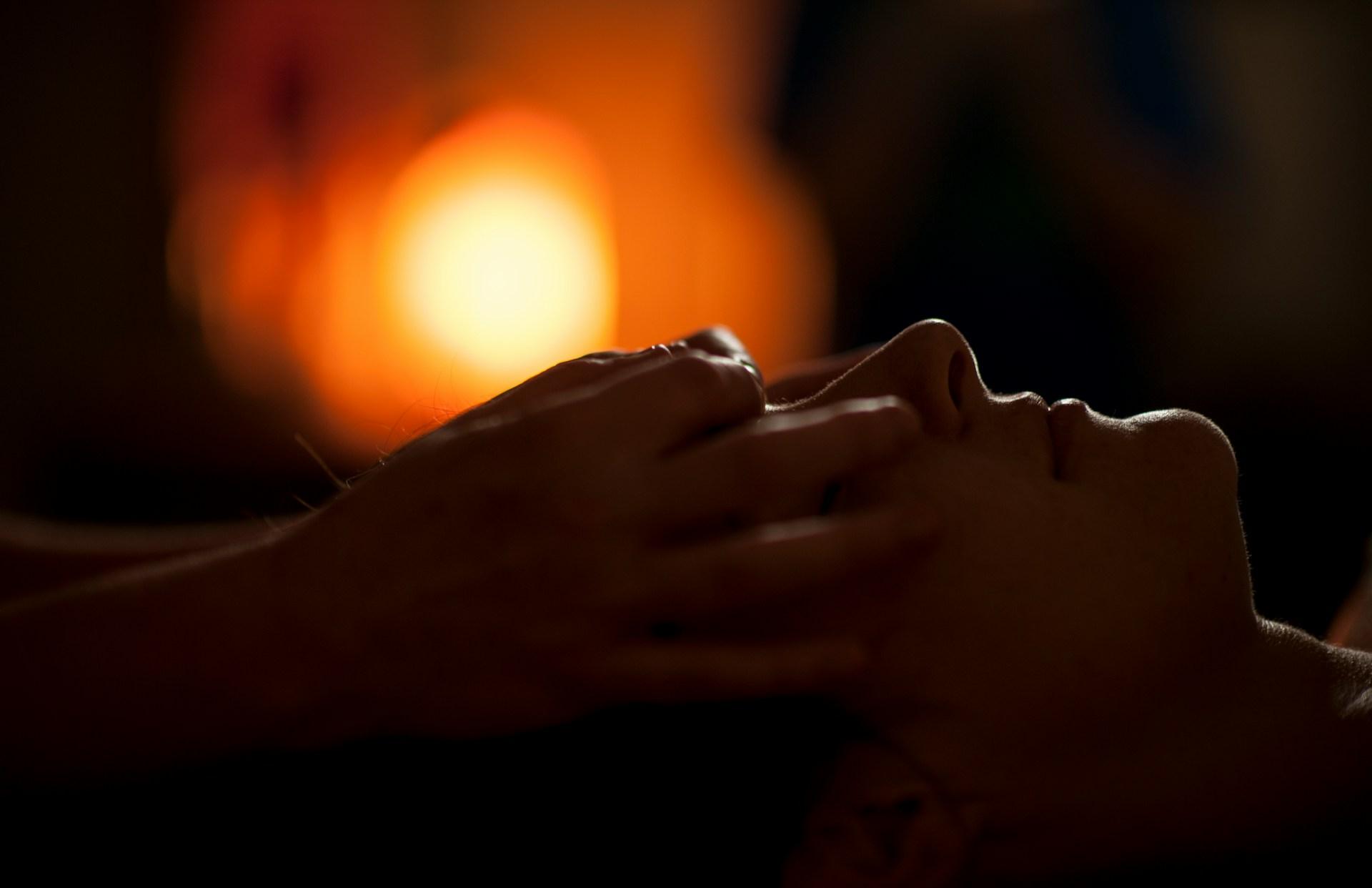
A face massage is a professional treatment on your face, and that is nearly the whole definition. You lie down on a padded table, your head resting in a cut-out cradle so you can breathe comfortably, and the therapist works across your forehead, cheeks, jawline and temples for as long as you book, usually a half hour or an hour. You stay dressed. The sheet covers everything except your face and, sometimes, the back of your neck. It is a massage, done by a practitioner, for your face.
Buccal massage is the version with one more fact attached to it: certain practitioners treat the inside of your cheek as part of the session. Buccal means "of the cheek", from the Latin bucca, "cheek", and in this context it is the intraoral part of the treatment: fingers resting inside your mouth against the inner cheek, working the same muscle the therapist massages from outside. That is the one thing about these treatments most people have never heard before being offered one, and it is what sends the wary reader searching for "inside the mouth" at two in the morning.
What the session looks like, first touch to getting up
You arrive, and someone shows you to the treatment room. There is usually a short conversation first, about where your face, neck or jaw feels tight, how firm you like it, and whether you want the inside-mouth part included. You can answer that honestly in the chair; nothing happens yet.
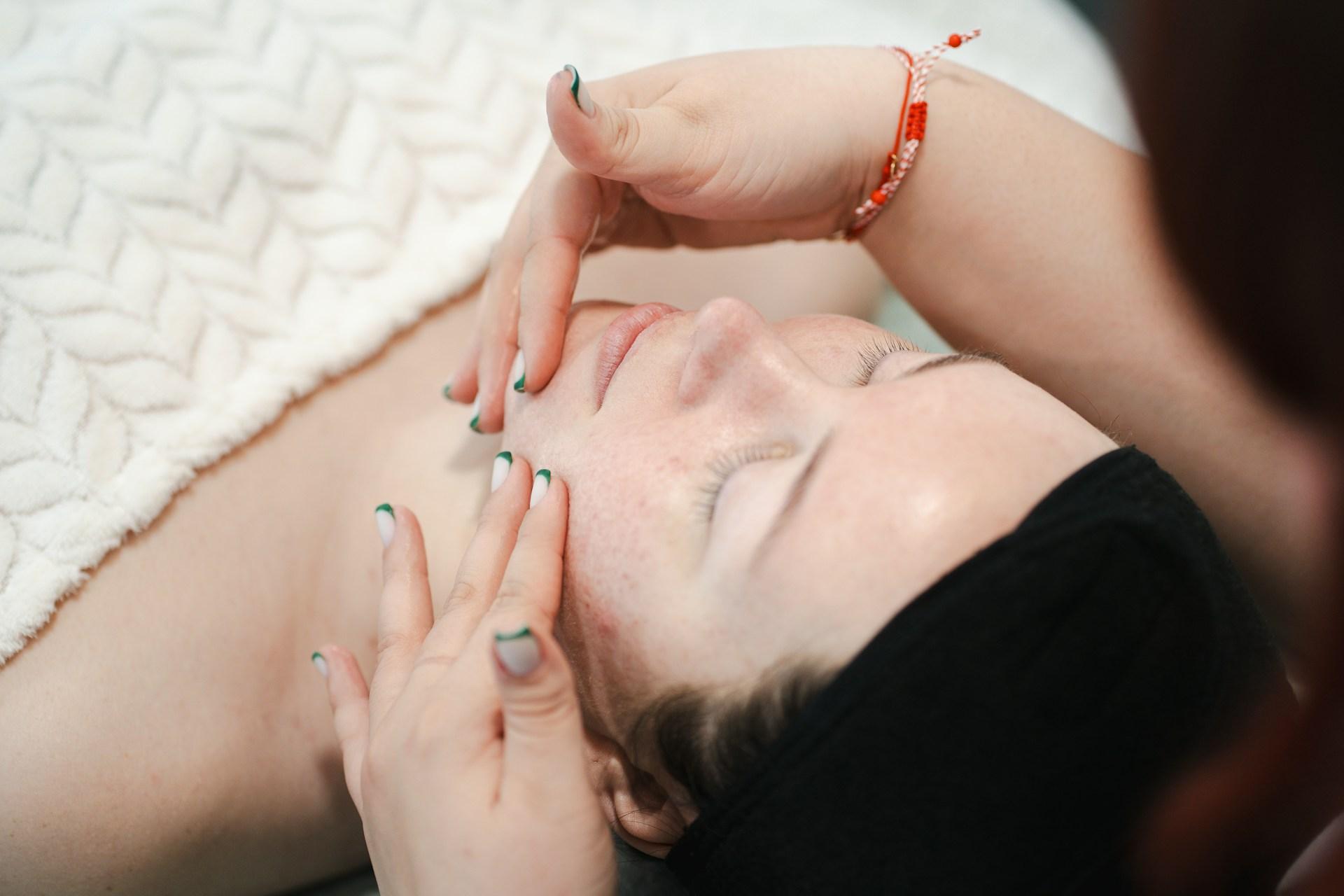
Then you lie down. The cradle under your head is the strangest part for a first-timer and settles into normalcy within ten seconds. Hair is pushed back, the therapist gets the lighting comfortable, and the work begins on the forehead: long, warm strokes from the brow to the hairline. Then the cheeks, then the jawline, thumbs following the bone from the ear down to the hinge. The temples get slow circles. Most sessions end with the neck and the base of the skull, because that is where the rest of the day actually lives.
The whole thing takes thirty to sixty minutes. Nothing about it requires undressing, talking, or any particular skill from you. Your job is to lie still and let the hands do the reading.
What it feels like
Face massage is stronger than people expect, in a good way. The muscles of the face are small, so the pressure needed to move them registers clearly on skin that carries so many nerves. Many people tell the story like this: the first two minutes feel like nothing, then the therapist reaches the jaw and the breath comes out louder than planned.
That is usually the masseter, the thick muscle from your cheekbone down to the hinge of the jaw. If you clench while concentrating, grind at night, or carry stress in your shoulders, it is one of the first places you notice hands on your face. The sensation at the right pressure is a deep, satisfying squeeze, the kind that makes you press your eyes shut and go quiet. Intense, not painful. A skilled practitioner knows the line, and they ask where you sit on it.
Afterwards the face often feels warm and loose, and the jaw and temples can stay tender for a day or so, the way a shoulder does after a hard workout. Some people sleep better that night. That is what people who come back are usually describing.
The buccal part: inside the mouth
Here is the fact nobody tells you before you book: in some practices, part of the treatment happens with a finger inside your mouth.
The therapist rests the pad of a finger against the inside of your cheek and works the muscle there together with a thumb on the outside of the jaw. It sounds alarming the first time you hear it, and it is the reason people ask what they do with their tongue. The answer is: nothing. You keep your jaw loose, let your mouth rest slightly open, and the finger fits comfortably against the cheek, above the gum line, with plenty of space for the tongue. The gag reflex is real and it passes. First touches inside the mouth can tickle or trip it, so practitioners go slowly, announce what they are doing, and let you settle first. Most clients say the awkward feeling disappears before the first real stroke.
Why anyone does it at all: the cheek muscle is big, it is where the face shows when it clenches, and it can be reached from both sides at once. Some clients book the buccal version specifically because the outside work never quite got to the tightness they feel behind the cheek.
And here is the other important half: it is optional. The intraoral part of a buccal massage is something the practitioner includes or leaves out on your request, and declining it does not make the rest of the treatment lesser. "Not the inside part, please" is a complete sentence, and therapists hear it regularly.
What it is for, and what it isn't
People book face and buccal massages for the obvious reasons: the face carries tension too. Long days at a screen leave you with a tired forehead, a tight jawline, temples that feel like they have been pinched since March. The massage works those muscles the way it works any muscle in the body, loosening them, warming them, giving the face the release the rest of your body gets twice a month.
What it is not: a therapy for whatever condition brought you in. If your jaw clicks, locks, or has been talked about by a doctor, that is the jaw joint talking, and facial massage is not the right conversation for it. The evidence for spa facial massage on a jaw joint is thin; this area has not been properly studied.
The jaw itself is another matter. A 2023 systematic review of manual therapy for temporomandibular disorders found that jaw-focused therapy helps pain and mouth opening. The effect sizes were small. And that evidence belongs to physiotherapy of the jaw, not to the facial massage described here. Someone with a clicking jaw who books this and feels better afterwards is having a pleasant, well-executed massage; they are not having their joint sorted. That line matters, because a lot of the promise around facial massage online is not.
It is also not a cosmetic treatment in the sense of sculpting anything. A face looks relaxed after because a relaxed face does, not because anyone shaped it.
What you can say no to
You are in charge of this visit, and the controls are simple words.
The moment pressure crosses from intense into sharp, say the word. "Softer", or simply "that's sharp", and a good practitioner eases up without comment. A session where you spend time enduring is a session done wrong, and yours doesn't have to be one of those.
If the jaw feels tender the next day, that is within the normal range. If pain stays sharp or comes with swelling, or anything worries you once you are home, that is a conversation with your doctor, not with a therapist's notes.
Who should not have one
Facial work is gentle relative to a full-body deep session, but it is not exempt from the ordinary rules about having a massage at all, recent skin treatments on the face, infections, conditions that need a clinician's say first. That list belongs in one place and lives at When You Should Not Have a Massage. Two sentences from here, because the decision is happening right about now: if your face carries anything broken, inflamed, or freshly treated, check with the person licensed to answer that before booking anyone's hands. This is general information, not medical advice. If you are unsure, ask your doctor.
What to ask before you book
Five questions on the phone will settle most of it:
Do they offer facial massage as a trained treatment, not an add-on to a body massage? How long does the facial session run? Is the buccal part included? How do they keep the intraoral work clean, gloves, fresh hands, whatever their practice is, ask directly, and it is a fair question. And who is the therapist, and what does their training cover when it comes to the face?
The longer version of that question, how to read the answers and tell a good practitioner from a vague one, sits at Choosing a Massage Therapist.
How this differs from the other facial massages
Two neighbours worth knowing by name, because both show up on menus that say "face". The first is lymphatic drainage of the face, a treatment aimed at moving fluid through the face rather than massaging its muscles. Its aim is the skin's puffiness, not the tension people carry behind the cheek and jaw, and a menu that promises depuffing instead of a massage is selling that one.
The second neighbour is jaw work aimed at the joint itself, the treatment for the clickers and lockers. A face massage never aims at the joint; it works the muscles of the face, jaw and temples, with or without the inside part, and makes no grander claims than that.
The walk out
Thirty to sixty minutes of hands on the face usually leaves the room quieter than it found you: face warm, jaw softer, the knot behind the cheek loosened a little. You sit up slowly, pull your hair forward, and walk out carrying the same face that walked in, just with a lighter hold on it. In jaw-pain forums, where people ask whether buccal massage is worth the money, the accounts tend to run to the other end of the scale: "has SAVED me", in the sense that it is the first thing all day that reached the knot behind their cheek.
Sharing Services
Pick the one you like.

Researched & Written by afinika
Welleta.com
Health educator for over 13 years.
Services
- massage